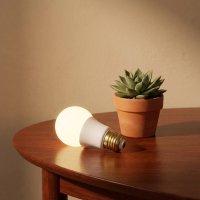
Stepping into the realm of smart home technology often begins with a simple yet powerful upgrade: smart lighting. Among the dazzling array of options, Bluetooth smart bulbs stand out as an accessible and highly efficient choice for transforming your living space. Imagine effortlessly setting the perfect mood, enhancing security, or even improving your sleep—all with a tap on your phone or a simple voice command. If you’re looking to dip your toes into smart lighting without a complex setup, you’ve found your ultimate guide.

What Exactly is a Bluetooth Smart Bulb?
At its core, a Bluetooth smart bulb is an LED light that communicates wirelessly with your devices using Bluetooth Low Energy (BLE) technology. Unlike traditional light bulbs that simply turn on and off with a switch, these smart bulbs can be controlled directly from your smartphone or tablet, offering a world of possibilities for customization. Think of it as having a personal lighting assistant right in your pocket.
A Bluetooth smart bulb works by establishing a direct connection between the bulb and your control device. This means your smartphone acts as the command center, sending instructions like “dim the lights” or “change to blue” directly to the bulb. This direct link is a game-changer, eliminating the need for a separate Wi-Fi network or a central smart home hub for basic functionalities. This makes the experience straightforward and incredibly user-friendly from the get-go.
Why Choose Bluetooth Smart Bulbs? Unpacking the Benefits
There’s a reason why Bluetooth smart bulbs are rapidly becoming a favorite for many smart home enthusiasts. They bring a unique set of advantages that make them a compelling choice, especially for those new to smart lighting or with smaller living spaces.
No Hub, No Hassle: Simplified Setup
One of the most appealing aspects of a Bluetooth smart bulb is its plug-and-play simplicity. Many models connect directly to your smartphone or tablet, meaning you don’t need to invest in an additional smart home hub or bridge to get started. Just screw in the bulb, download the manufacturer’s app, and pair it via Bluetooth—it’s as straightforward as connecting a Bluetooth speaker. This ease of installation makes them an excellent option for renters or anyone seeking a hassle-free entry into smart lighting.
Energy Efficiency That Shines
Just like their Wi-Fi counterparts, Bluetooth smart bulbs are built on energy-efficient LED technology. However, Bluetooth Low Energy (BLE) takes it a step further, consuming even less power for communication than Wi-Fi modules. This means not only do you benefit from the inherent energy savings of LEDs, but the connectivity itself is also optimized for minimal energy drain, leading to a smaller environmental footprint and lighter electricity bills. It’s a win-win for both your wallet and the planet.
Instant Response, Effortless Control
|
Our Picks for the Best Smart Bulb in 2026
As an Amazon Associate I earn from qualifying purchases.
|
||
| Num | Product | Action |
|---|---|---|
| 1 | SYLVANIA Wifi LED Smart Light Bulb, 60W Equivalent Full Color and Tunable White A19, Dimmable, Compatible with Alexa and Google Home Only - 4 Pack (75674) |

|
| 2 | Kasa Smart Light Bulbs that works with Alexa and Google Home, Dimmable Smart LED Bulb, A19, 9W, 800Lumens, Soft White(2700K), CRI≥90, WiFi 2.4Ghz only, No Hub Required, 4 Count (Pack of 1)(KL110P4) |
|
| 3 | Amazon Basics Smart A19 LED Light Bulb, Dimmable Soft White (2700K), 9W (60W Equivalent), 800LM, Works with Alexa Only, 2.4 GHz Wi-Fi, No Hub Required, 4 Pack |
|
| 4 | Govee Smart Light Bulbs, Color Changing Light Bulb, Work with Alexa and Google Assistant, 16 Million Colors RGBWW, WiFi & Bluetooth LED Light Bulbs, Music Sync, A19, 800 Lumens, 4 Pack |
|
| 5 | Bluex Bulbs 3 Pack Motion Sensor LED Light Bulb A21, 15W 1300 Lumens, Warm White 3000K, Automatic On/Off Security Light, E26 Medium Base Indoor & Outdoor Use, 120V (3000K - Warm White) |
|
| 6 | Govee LED Smart Light Bulbs, 1000LM Color Changing Light Bulb, Wi-Fi & Bluetooth Light Bulbs, Work with Alexa and Google Assistant, Dimmable RGBWW A19 75W Equivalent Smart Bulbs, 2 Pack |
|
| 7 | Amazon Basics Smart A19 LED Light Bulb, Color Changing, 9W (60W Equivalent), 800LM, Works with Alexa Only, 2.4 GHz Wi-Fi, No Hub Required, 1 Pack |
|
| 8 | Linkind Smart Light Bulbs, Smart Bulb That Work with Alexa & Google Home, LED Light Bulbs Color Changing, 104 Preset Scene, Music Sync, A19 E26 2.4GHz RGBTW WiFi Bluetooth Light Bulb 60W, 800LM, 4Pack |
|
| 9 | Tapo TP-Link Smart Light Bulbs, 16M Colors RGBW, Dimmable, Compatible with Alexa and Google Home, A19, 60W Equivalent, 800LM CRI>90, 2.4GHz WiFi only, No Hub Required, L530E(4-Pack) |
|
| 10 | Kasa Smart Light Bulbs, Full Color Changing Dimmable Smart WiFi Bulbs Compatible with Alexa and Google Home, A19, 60 W 800 Lumens,2.4Ghz only, No Hub Required, 2-Pack (KL125P2), Multicolor |
|
Ever experienced a slight delay when commanding your smart lights? With Bluetooth smart bulbs, that’s often a thing of the past. Because they establish a direct, local connection with your device, commands are typically processed and executed with remarkable speed. There’s no routing through a cloud server or a central hub, resulting in near-instantaneous changes to brightness, color, or scenes. It truly feels like a natural extension of your intentions, making your daily interactions with light fluid and enjoyable.
Budget-Friendly Brilliance
Generally speaking, Bluetooth smart bulbs tend to be more affordable than smart bulbs relying solely on Wi-Fi or other protocols that might require a separate hub. This lower entry cost makes smart lighting accessible to a wider audience, allowing you to experiment with smart home features without a significant financial commitment. You can start with a single bulb and expand your setup as your needs and budget grow.
Enhanced Security for Peace of Mind
With a direct, localized connection, Bluetooth smart bulbs often present a more secure and private option. The data exchange happens within a limited physical range, directly between your device and the bulb, rather than routing through your home Wi-Fi network and potentially the cloud. This reduces potential vulnerabilities compared to systems that are constantly connected to the internet, giving you an added layer of privacy and control over who (or what) interacts with your lighting. As smart home security expert, Dr. Lena Petrova, once noted, “The beauty of Bluetooth smart bulbs lies in their contained ecosystem, offering a significant advantage for users prioritizing local control and data privacy.”
Offline Control: Light Stays On, Even Without Internet
One of the biggest frustrations with Wi-Fi-dependent smart devices is their reliance on a stable internet connection. If your Wi-Fi goes down, your smart lights might become “dumb” again. Not so with many Bluetooth smart bulbs. Since they communicate directly, you can still control them locally even if your internet service is interrupted. This ensures that you always have command over your lighting, providing a reliable experience even during network outages.
Understanding the Limits: Where Bluetooth Smart Bulbs Shine Less Brightly
While Bluetooth smart bulbs offer fantastic advantages, it’s also important to understand their inherent limitations to determine if they’re the right fit for your specific smart home ambitions.
Range and Coverage: A Close Relationship
The defining characteristic of Bluetooth technology is its limited range. Typically, a Bluetooth smart bulb can be reliably controlled from about 30 to 100 feet in an unobstructed line of sight. This makes them perfect for single rooms, small apartments, or specific areas where you’re typically within close proximity to the lights. However, controlling bulbs across multiple rooms, through thick walls, or in a large house can become challenging due to signal degradation. For expansive homes, you might find yourself walking closer to each bulb to ensure connectivity.
Remote Control: Staying Connected from Afar
Because of their direct, short-range connection, most standard Bluetooth smart bulbs cannot be controlled when you’re away from home. If you forget to turn off the living room light after leaving for work, you won’t be able to switch it off from your office. For true remote access, you would typically need a compatible Bluetooth-to-Wi-Fi bridge or a smart home hub that connects your Bluetooth bulbs to your internet network. This allows you to integrate them into a broader smart home ecosystem for global control.
Smart Home Integration: A Growing Ecosystem
While Bluetooth smart bulbs offer excellent standalone control, their integration with wider smart home ecosystems like Amazon Alexa, Google Assistant, or Apple HomeKit can be more limited compared to Wi-Fi or Zigbee bulbs. Some Bluetooth bulbs offer direct compatibility with these voice assistants, often through a specific speaker or display that has Bluetooth capabilities. However, for seamless, whole-home automation and complex routines involving many different types of smart devices, a dedicated smart home hub or a hybrid bulb (one that supports both Bluetooth and Wi-Fi/Zigbee) might be necessary to unlock the full potential.
Bluetooth vs. Wi-Fi Smart Bulbs: Which is Right for Your Home?
Choosing between Bluetooth smart bulbs and Wi-Fi smart bulbs often comes down to your priorities, home size, and existing smart home setup. Both offer incredible convenience, but they achieve it through different pathways.
| Feature | Bluetooth Smart Bulb | Wi-Fi Smart Bulb |
|---|---|---|
| Connectivity | Direct device-to-bulb (BLE) | Connects to home Wi-Fi network |
| Hub Required | Often no hub needed | Many are hub-less; some systems use a hub for advanced features |
| Internet Dependency | Works offline for local control | Requires active Wi-Fi and often internet for full functionality |
| Range | Shorter (30-100 ft), best for single rooms | Longer (within Wi-Fi network coverage), ideal for larger homes |
| Remote Control | Limited (requires bridge/hub for outside home) | Full remote control via app from anywhere with internet |
| Setup | Simple, plug-and-play pairing | Easy, but requires Wi-Fi configuration |
| Response Speed | Faster, direct communication | Slight delay possible (cloud processing) |
| Energy Consumption | More energy-efficient (BLE) | Slightly higher due to constant Wi-Fi connection |
| Cost | Generally more affordable upfront | Can be more expensive, though prices are dropping |
| Security/Privacy | Enhanced due to local, direct connection | Potential risks if Wi-Fi network is compromised |
| Smart Home Integration | More limited, sometimes needs a Bluetooth-enabled hub | Broader compatibility with major ecosystems |
Choose Bluetooth Smart Bulbs if you:
- Have a smaller space or want to smarten up a single room.
- Prefer a simple, straightforward setup without a hub.
- Value offline control and robust security.
- Are looking for a budget-friendly entry into smart lighting.
Choose Wi-Fi Smart Bulbs if you:
- Need whole-home coverage and remote control from anywhere.
- Desire seamless integration with a wide range of smart home devices and voice assistants.
- Have a robust home Wi-Fi network.
Keep in mind that some innovative products, like certain Philips Hue bulbs or Nanoleaf Essentials, offer hybrid solutions, supporting both Bluetooth for local control and Zigbee/Wi-Fi for broader smart home integration, giving you the best of both worlds.
Setting Up Your Bluetooth Smart Bulb: A Step-by-Step Guide
Getting your Bluetooth smart bulb up and running is incredibly simple. Here’s how you can do it in just a few easy steps:
- Screw It In: Replace your old bulb with the new Bluetooth smart bulb in your desired fixture. Ensure the fixture’s power is off before screwing in the bulb.
- Power On: Turn on the power switch to the fixture. Your bulb should light up, indicating it’s ready for pairing.
- Download the App: Head to your smartphone’s app store and download the manufacturer’s dedicated app for your smart bulb. This app is your primary control interface.
- Open the App & Pair: Open the app and follow the on-screen instructions to discover and pair your new bulb. This usually involves enabling Bluetooth on your phone and selecting the bulb from a list.
- Customize Your Light: Once paired, you can start exploring the app’s features! Adjust brightness, change colors, set schedules, or create custom lighting scenes to match your mood or daily routine.
Smart Usage Tips & Troubleshooting Common Issues
Even with the simplicity of Bluetooth smart bulbs, a few tips can enhance your experience, and knowing how to troubleshoot common hiccups will keep your smart lighting shining bright.
Optimizing Your Experience
- Group Control: Most smart bulb apps allow you to group multiple Bluetooth bulbs together. This is fantastic for controlling all the lights in a room simultaneously, making it easy to create a uniform ambiance.
- Schedule Your Day: Take advantage of scheduling features to automate your lighting. Have lights gradually brighten in the morning to gently wake you up, or dim slowly in the evening to prepare for sleep.
- Leverage Color Temperature: Different color temperatures can significantly impact your well-being. Cooler, brighter lights are great for focus during the day, while warmer, softer tones are ideal for relaxation in the evening. Adjusting the color temperature of your Bluetooth smart bulb can even help regulate your sleep patterns by minimizing blue light exposure before bed.
- “Away Mode” for Security: If your bulb’s app offers an “Away Mode” or “Vacation Mode,” use it! This feature can randomly turn lights on and off, simulating occupancy and deterring potential intruders when you’re not home.
What to Do When Things Go Dim
- Check Range: The most common issue with Bluetooth bulbs is being out of range. Ensure your controlling device (smartphone/tablet) is within the recommended distance from the bulb.
- Restart the App & Bluetooth: Sometimes a quick restart of the bulb’s app or toggling your phone’s Bluetooth off and on again can resolve minor connectivity glitches.
- Power Cycle the Bulb: Turn off the light switch, wait 10-15 seconds, and then turn it back on. This can “reboot” the bulb and help it reconnect.
- Update Firmware/App: Always keep your bulb’s app and the bulb’s firmware (if applicable) updated. Manufacturers frequently release updates that improve performance and fix bugs.
- Re-pair the Bulb: If all else fails, you might need to unpair the bulb from your app and then pair it again. This is like a factory reset for the connection and often resolves persistent issues.
Leading Brands and What to Look For
The market for Bluetooth smart bulbs is continuously expanding, with many reputable brands offering innovative products. While selecting, consider these factors:
- Compatibility: Does the bulb work seamlessly with your existing smartphone (iOS or Android) and any smart home devices or voice assistants you plan to use?
- Features: Beyond basic on/off and dimming, what other features do you need? Color changing, scheduling, music sync, or special effects?
- Reviews: Check customer reviews for insights into ease of use, reliability, and long-term performance.
- Price: While Bluetooth bulbs are generally affordable, prices can vary based on brand and features. Balance your budget with your desired functionalities.
Brands like Philips Hue, known for their premium quality, offer bulbs with both Bluetooth and Zigbee capabilities, providing flexibility for future expansion. Nanoleaf Essentials also features a range of attractive Bluetooth smart bulbs that prioritize ease of use and vibrant colors.
FAQs: Your Bluetooth Smart Bulb Questions Answered
Q1: Do Bluetooth light bulbs need Wi-Fi?
A1: No, most Bluetooth smart bulbs do not require Wi-Fi for local control. They connect directly to your smartphone or tablet via Bluetooth. However, for remote control from outside your home or for integration with some smart home ecosystems, a Wi-Fi bridge or hub might be necessary.
Q2: What is the range of a Bluetooth smart bulb?
A2: The typical range for a Bluetooth smart bulb is approximately 30 to 100 feet (10 to 30 meters) in an open, unobstructed environment. Walls and other obstacles can reduce this range.
Q3: Can I control multiple Bluetooth bulbs at once?
A3: Yes, most Bluetooth smart bulb apps allow you to group multiple bulbs together and control them simultaneously as a single unit, making it easy to manage lighting in an entire room. Advanced Bluetooth Mesh technology further enhances this capability, allowing bulbs to relay commands to each other, extending the effective range and control over many devices.
Q4: Are Bluetooth smart bulbs safe for my eyes/sleep?
A4: Like all LED lights, Bluetooth smart bulbs emit blue light, which can affect melatonin production and sleep patterns if exposed late at night. It’s advisable to switch to warmer color temperatures in the evening or use settings that filter blue light to mitigate potential impacts on sleep and eye health.
Q5: How long do Bluetooth smart bulbs last?
A5: Bluetooth smart bulbs, being LED-based, have an impressive lifespan. On average, they can last anywhere from 25,000 to 50,000 hours, significantly longer than traditional incandescent bulbs and even many CFLs. This translates to many years of use, reducing the frequency of replacements.
Q6: Can I use them outdoors?
A6: You can use Bluetooth smart bulbs outdoors only if they are specifically rated for outdoor use and are designed to withstand environmental conditions like moisture and temperature fluctuations. Always check the product specifications for outdoor compatibility.
Conclusion: Light Up Your Life the Bluetooth Way
Bluetooth smart bulbs offer a compelling entry point into the world of smart lighting, blending simplicity, efficiency, and direct control into a single, intuitive package. Their ease of installation, energy-saving capabilities, and reliable offline functionality make them an excellent choice for anyone looking to personalize their lighting experience without the complexities of a full-blown smart home system. While they may have range limitations, their benefits in smaller spaces or for specific lighting zones are undeniable. By understanding their strengths and weaknesses, you can confidently choose, install, and enjoy your Bluetooth smart bulbs, illuminating your life with smart, customizable light.
Smart home that does not lock you in
Free PDF — protocol compatibility matrix for 30 hubs and devices.